

HAPS Vs Satellites: Which One Wins For Stratospheric Coverage?
1. The question itself reveals a Shift in How We Think About the concept of coverage
For nearly few decades, discussion regarding reaching remote or under-served regions by air has been defined as a decision between ground infrastructure and satellites. The advent of high-altitude platform stations has opened up a third option that doesn't seem to be in a neat way It's precisely this that makes this comparison fascinating. HAPS won't be attempting to replace satellites everywhere. They're competing to be used in certain circumstances where operating at 20 km instead of 500 or 35,000 miles produces better results. Recognizing where that advantage is real and where it isn't will be the main focus of this game.
2. Latency Is Where HAPS Win Without a doubt
The time for signal travel is determined by distance, and distance is where stratospheric platforms enjoy an unambiguous advantage in structural design over any orbital system. Geostationary satellites span 35,786 km above the equator. This produces circular latency that is around 600 milliseconds. These are acceptable for voice calls albeit with noticeable delay, problematic for real-time applications. Low Earth orbit constellations have greatly improved this operating at 550 to 1,200 kilometers with latency in the 20-40 millisecond range. A HAPS vehicle travelling at 20 kilometers can deliver latency levels similar to terrestrial networks. For applications in which responsiveness is a factor — industrial control systems financial transactions, emergency communications direct-to-cell connectivity that is not an issue.
3. Satellites Win on Global Coverage, and That Matters
The current stratospheric platforms could cover the entire globe. A single HAPS vehicle can cover a regional footprint that is enormous for terrestrial measurements, but limitless. In order to achieve global coverage, one would need several platforms scattered around the globe, each one with its own operational requirements in energy, systems for power, and stationkeeping. Satellite constellations, in particular large LEO networks, cover the globe with overlapping covers in ways the stratospheric system can't replicate with the current vehicle counts. When it comes to applications that require truly global reach — maritime tracking global messaging, polar coverage — satellites remain the only option that is viable at size.
4. Resolution and Persistence Favor NASA's HAPS to Earth Observation
If the mission requires monitoring an entire region in continuous detail -like tracking methane emission from an industrial corridor, monitoring the progress of a wildfire unfold in real-time or monitoring the oil pollution expanding from an incident offshore The continuous close-proximity characteristics of a stratospheric instrument produces a quality of data that satellites are unable to beat. Satellites in low Earth orbit travels over every single point on the surface for several minutes at a time with revisit intervals measured as days or hours depending on constellation size. A HAPS vehicle that has a fixed position above the same area for weeks, provides continuous observations and sensor proximity that allows far higher spatial resolution. for stratospheric purposes in earth observation this persistence is usually far more valuable than global reach.
5. Payload Flexibility is a Benefit of HAPS Satellites. Satellites Can't effortlessly match
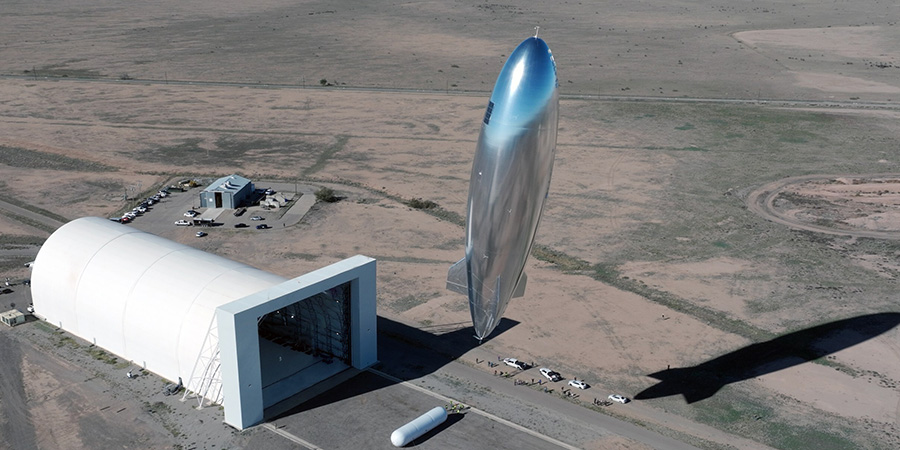
When a satellite is created, its payload has been fixed. Upgrading sensors, swapping communication hardware or adding new instruments calls for the launch of completely new spacecraft. An stratospheric-based platform returns to earth between missions which means its payload is able to be upgraded, reconfigured and completely redesigned as the requirements of missions change or advances in technology become available. Sceye's airship design is specifically designed to accommodate the capacity of a payload that is meaningful, allowing combination of telecommunications antennas carbon dioxide sensors and disaster detection systems all on the same aircraft This flexibility would require multiple dedicated satellites to replicate each with its own costs for the launch as well as an orbital slot.
6. The Cost Structure is In fundamentally different
Launching a satellite requires the costs of rockets along with ground segment development, insurance and acceptance of the fact that hardware malfunctions in orbit are a permanent write-off. Stratospheric platforms are more akin to aircraft — they can be recovered, examined then repaired and re-deployed. This doesn't make them less expensive than satellites when measured on a cost-per-coverage basis, but this affects the risk profile as well as the cost of upgrades significantly. For those trying new services in new areas or entering new markets, having the ability to access and modify their platform rather then accepting hardware from orbit as a sunk-cost is a significant operational benefit and is particularly relevant in the early commercialization phase that the HAPS market is traversing.
7. HAPS may be able to act as 5G Backhaul, Where Satellites Are Not Effectively
The telecommunications structure that is made possible by the high-altitude platform station that operates as a HIBS or it's a tower of cells in the sky It is designed to integrate with existing modern mobile networking standards that satellite typically isn't. Beamforming using a stratospheric communications antenna permits dynamic allocation of signals across a broad coverage area and can support 5G backhaul equipment on the ground as well as direct-to devices simultaneously. Satellites are getting more adept of this, but the nature of operating closer to the ground offers stratospheric technologies an advantage in signal capacity, frequency reuse and compatibility with spectrum allocations specifically designed for terrestrial networks.
8. Operational and weather risk differ in significant ways between the Two
Satellites, once they have been placed in stable orbit, are often indifferent to weather conditions on the terrestrial side. The HAPS vehicle operating in the stratosphere must contend with an environment that is more complicated to operate in with stratospheric wind patterns such as temperature gradients, the engineering challenge of managing night in altitude and not losing station. The diurnal cycle, which is the regularity of solar energy availability and overnight power draw as a design constraint that all solar-powered HAPS must work to overcome. Improvements in lithium-sulfur batteries' energy density and efficiency of solar cells are closing this gap, but it's the real operational problem that satellite operators can't encounter in the same way.
9. The most honest answer is that They perform different tasks.
Framing HAPS versus satellites as an all-or-nothing contest misses the point of how non-terrestrial infrastructure is likely evolve. The most accurate view is a complex architecture in which satellites handle worldwide reach and services where coverage universality overrides everything else while stratospheric platforms aid in local persistence needs — connectivity in geographically challenging environments, continuous environmental monitoring, disaster response, and extended 5G coverage into regions where the terrestrial rollout isn't economically viable. Sceye's placement embodies exactly this type of thinking: a technology designed to do things in a specific region, for extended time periods, with the use of a sensor and communications system that satellites simply cannot reproduce at that level and the distance.
10. The Competition Will In the End Sharpen Both Technologies
There's a good argument that the growth of reputable HAPS programmes has helped accelerate developments in satellite technology, and vice versa. LEO the constellation operators have expanded the boundaries of coverage and latency, in ways that have raised the bar HAPS have to meet the requirements of competing. HAPS developers have proven their regional monitoring capabilities that is prompting satellite operators think harder about revisit frequency and sensor resolution. It is the Sceye and SoftBank alliance targeting Japan's all-encompassing HAPS network, which has pre-commercial services set for 2026 is one of the clearest evidences yet that stratospheric platforms have evolved from a theoretical rival to an active partner to influence how the interplanetary connection and market for observations develops. Both technologies will be better for the demands. Check out the top natural resource management for more advice including softbank haps pre-commercial services 2026 japan, investment in future tecnologies, sceye aerospace, HIBS technology, Sceye News, sceye softbank partnership, sceye haps softbank partnership details, 5G backhaul solutions, softbank group satellite communication investments, sceye haps payload capacity and more.
How Stratospheric Platforms Are Reshaping Earth Observation
1. Earth Observation Has Always Been Constrained By the Observer's Location
Every new advancement in mankind's capability to monitor the planet's surface has come from finding an improved vantage point. Ground stations could provide local precision but they were not able to reach. Aircraft added range however, they ate oil and required crews. Satellites covered the globe but also introduced distance, which traded clarity and revisit frequencies against scale. Each step upward in altitude helped solve some problems, while creating another, and the compromises involved in each one influence what we know about our planet. However, more important, what we cannot see clearly enough to be able to act upon. Stratospheric platforms provide a vantage area that connects aircraft and satellites with the intention of resolving certain of the longest-running choices, instead of simply shifting the two.
2. Persistence refers to the capacity of observation That Can Change Everything
The single most transformative thing the stratospheric platform provides for earth observation. It isn't the level of resolution not the area of coverage, and definitely not sensor sophistication. It is the persistence. Being able to keep track of the same location continuously, for a period of days or weeks at a go, without gaps in the records of data, can alter the kind of questions that earth observation can address. Satellites provide answers to questions about state how is this particular location look like at right now? Continuous stratospheric platforms provide answers to questions about process — how is this condition developing and at what speed and due to what causes and at what point do interventions become necessary? In the context of monitoring greenhouse gas emissions, flood progression, wildfires as well as the spread of coastal pollution processes are the ones that will affect the decision-making process and need the consistency that only persistent observation can provide.
3. It is believed that the Altitude Sweet Spot Produces Resolution That Satellites Do Not Match at Scale
Physics determines the relation between the sensor aperture, altitude and ground resolution. A sensor operating at 20 kilometers will be able to achieve ground resolution figures that require an unpractically large aperture to replicate from low Earth orbit. It is the reason a stratospheric Earth observation platform can identify individual infrastructure elements — pipelines, storage tanks commercial plots of land, coastal vessels — – that appear as a subpixel blur in satellite images at the same price. For instance, monitoring the spread of oil pollution from an offshore location or determining the exact location of methane leaks in the pipeline's length or tracking the leading edge of a forest fire over an extensive terrain, this advantages directly impacts the specificity of the data available to people who manage the operation and.
4. Real-Time Methane Monitoring Becomes Operationally Effective From the Stratosphere
Methane monitoring from satellites has significantly improved in recent years however the combination of the frequency of revisit and the resolution limitations means satellite-based methane detection tends towards identifying massive, persistent emission sources instead of sporadic releases from certain sources. The stratospheric platform which performs real-time monitoring of methane over an oil and gas producing area, an agriculture zone or a waste management area alters this dynamic. Continuous monitoring at a high resolution can identify emission events as they occur, attributing them to specific sources with a precision that satellite data could not routinely supply, and then provide the kindof time-stamped specific proof of source that the regulatory enforcement and voluntary emissions reduction programs both require to function effectively.
5. Sceye's approach integrates observation with the Mission Architecture of Broader
The main difference between Sceye's approach stratospheric observation of the earth rather than the conventional approach of treating it as a stand-alone installation of sensors is incorporation of observation capabilities into the larger multi-mission platform. The same vehicle that carries greenhouse gas sensors also comes with connectivity hardware including disaster detection and monitoring systems and possibly other environmental surveillance payloads. This isn't just a cost-sharing strategy, but provides a unified view of how the streams of data from a variety of sensors become more valuable when combined rather than as a stand-alone. The connectivity tool that monitors the environment is more beneficial to operators. An observation platform that also includes emergency communications is effective for government. The multi-mission design increases the effectiveness of a single stratospheric platform in ways distinct, single-purpose vehicles are unable to duplicate.
6. Monitoring of Oil Pollution demonstrates the operational benefit of close Proximity
Controlling oil-related pollution offshore and coastal environments is an area where stratospheric observation has advantages over satellite or airborne approaches. Satellites can identify massive slicks, but struggle with the required resolution to spot the patterns of spreading, shoreline contact, and the behaviour of smaller releases preceding larger ones. Aircrafts have the ability to attain the required resolution but they cannot sustain continuous coverage across large areas without costly operational expense. A stratospheric platform that is located over a coastline can follow pollution events from initial discovery through spreading of the impact on shorelines, ultimately dispersal. the continuous spatial and temporal information that emergency response and legal accountability demand. The capability to monitor oil pollution over a long observation window with no gaps is an impossible feat for any other platform type at the same price.
7. Wildfire Viewing from the Stratosphere Captures What Ground Teams are unable to see
The perspective that stratospheric high altitude provides of an active wildfire is qualitatively different from anything is available on the ground or from aircrafts flying low. Fire behaviour across complex terrain (spotting ahead of the front of the fire, spotting crown fire development, the interactions between fire, changes in the wind patterns as well as fuel humidity gradients is evident in its complete spatial context only when you are at an adequate altitude. A stratospheric platform observing active fires provides incident commanders with a live, all-encompassing view of the fire's behavior that enables them to make their resource deployment decisions according to what the fire is actually doing and not the specific issues that ground crews in particular areas are experiencing. Detecting climate disasters in real time from this point of view will not only improve the response time -it improves the effectiveness of decision-making throughout an event's duration.
8. The Data Continuity Advantage Compounds Over Time
Individual observations have value. Continuous observation records possess a compounding values that increase non-linearly in the length of time. A week of stratospheric earth observations over a farming zone establishes a baseline. A month's observations reveal seasonal patterns. An entire year captures the year's cycle of development in terms of water use soil conditions, and the degree of variation in yield. Multi-year records become the foundation for understanding how the landscape is changing as a result of climate change or land management practices and trends in water availability. When it comes to natural resource management — forestry, agriculture, water catchment, coastal zone management -This record of cumulative observations is more valuable than any single observation, regardless of resolution, or even how prompt its delivery.
9. The technology that can enable Long Observation Missions is Rapidly Developing
Stratospheric observations of the earth are as effective as the platform's capability to stay stationary long enough to generate reliable data records. The energy systems that determine endurance – solar cell efficiency on aircrafts that fly in stratospheric space, lithium-sulfur batteries with energy density of 425 Wh/kg. Also, the closed power loop that carries every system during the diurnal cycles are evolving at a pace that is beginning to make multi-week, multiple-month stratospheric mission operations realistic rather than aspirationally planned. Sceye's efforts to develop the technology of New Mexico, focused on verifying these systems under real operating conditions, rather than laboratory projections, represents the kind of technological advancement that is directly translating into longer observation times and efficient data records for applications that rely on them.
10. Stratospheric Platforms are Creating the New Environmental Reputability
Perhaps the most important and long-lasting consequence of stratospheric observation capabilities is what it does to the information surrounding environmental compliance and natural resource stewardship. When persistent, high-resolution monitoring of land use change in the water extraction process, as well as polluting events is made available indefinitely instead of frequently, the accountability landscape changes. Industrial companies, agricultural businesses and governments as well as extractors of resources all act differently when they realize that what they are doing is being continuously observed from above, with data that is specific enough that it is legally significant and relevant enough to inform how to respond before damage becomes irreparable. Sceye's high-altitude platforms, and the broader category of high-altitude platforms that are pursuing similar observation goals, are developing the infrastructure for a world where environmental accountability is grounded in continuous observation, rather than periodic self-reporting — a change that has implications far beyond the aerospace industry that will make it possible. View the recommended softbank sceye haps japan 2026 for site recommendations including sceye haps softbank japan 2026, Stratospheric infrastructure, detecting climate disasters in real time, softbank haps pre-commercial services 2026 japan, what is a haps, sceye haps airship payload capacity, Sceye HAPS, whats haps, what are haps, sceye haps project and more.